Advice & Technical Support

At River Canal Rescue, we’re not just here to fix problems—we’re here to help you prevent them.

Empowering Boaters Beyond Breakdowns

We believe in education, confidence, and self-reliance.

That’s why this site is packed with practical guidance, expert tips, and easy-to-follow resources designed to help boaters take charge of their own maintenance and safety.

Whether you’re new to boating or a seasoned cruiser, our content is here to support your journey—so you can understand your vessel better, spot issues early, and feel more in control on the water.

Visit our YOUTUBE channel for some ‘how to’ videos

Preventative Maintenance for Narrowboats

Much like a car engine your boat engine needs general maintenance to make sure that everything is in working order. With our boat maintenance resources, you will find some checks that are recommended by our engineers for preventive maintenance for narrowboats.

If you would like information on anything mentioned below or would like the advice of an RCR engineer about boat maintenance please do not hesitate to contact us on 01785 785680.

  • Change or clean the air/oil/fuel filters regularly – some common causes of breakdowns that RCR engineers attend.
  • Before setting off cruising, check that all moving parts i.e. cables, are fully greased.
  • Check that all bolts and connections are tight.
  • Check that the batteries are charging correctly. Last year RCR attended 423 battery related breakdowns.
  • Check that the morse control is working correctly and that the throttle and gears are working.
  • Check that you have enough fuel to complete your journey.
  • When the engine is warm check that the oil pressure and coolant temperature are as it should be.
  • Check the condition of stern gland and there is plenty of grease supplied to it.
  • Make sure that the prop shaft is turning freely.
  • Check that the charge rate from the alternator to the batteries is as it should be.
  • Check the engine oil and gearbox oil levels and top up if need be.
  • Check the condition of the fan belt. If it is worn get it replaced.
  • Check all coolant hoses for leaks and wear and tear. Replace if required.
  • For raw water-cooling engines, check the seacock and all pipe work for leaks.
  • Check all fuel lines and shut off valves for leaks.
  • When starting the engine make sure that the charge light is off and that the alternator is charging.
  • Check the conditions of the engine mounts. After a years cruising they have had a lot to cope with. If they are worn replace them or if the bolts seem loose, tighten them before cruising again.
  • When leaving the boat for the winter, make sure to use anti-freeze.
  • Also to stop condensation within the engine, sure fuel treatment. The fuel treatment that RCR recommends is Marine 16 and it can be used in any engine. This can be purchased for £22 from the RCR webshop.

The freezing temperatures in December and January may be gone, but should not be forgotten as they can result in split or fractured pipes. Whist seeming basic, the effects of a split or fractured pipe can be catastrophic on a boat leading to complete or partial flooding over a gradual period. If the pipe in question relates to a cold or hot water system on the boat the consequences will not be as severe as a raw freshwater cooling system with metal pies. A split and flooding here will almost certainly lead to sinking if not spotted and may not be covered by insurers as not all cover frost damage, or gradual incursion of water. If covered insurance polices normally insist that machinery is winterised according to manufacturers recommendations if not available then the advice of a qualified engineer should be sought, but to take no precautions is just asking for trouble.

Just like cars any closed loop cooling system needs to have antifreeze added and replaced (per manufacturers guidelines) Not only will this minimise the risk of splits or fractures associated with freezing water, but it will also improve the cooling efficiency of the engine and minimise corrosion risk to the engine.

Where raw water (drawn from the river) cooling systems are in place these should be properly drained down by briefly running the engine when out of the water to ensure the system is empty what do you do if left afloat? RCR recommends that the quickest and simplest solution is to shut off the inlet valve (seacock) and then drain as much water from the system as possible, where there is not a drain plug available, disconnect a hose drain the water from the system and leave disconnected, although this will not empty the system completely it will allow for expansion should the water freeze and therefore reduce the risk of ruptured pipes. If there are any tight bends which are accessible it is also worth insulating as this is where fluid will collect even after draining. you will need to reconnect any pipes and refill the system and open the seacock once you are ready to start cruising again).

For heating systems and fresh water tanks these should be drained and where possible taps left in an open position to allow for expansion if any water is still in the system.

Ensure that the engine and its controls are clearly marked if the engine is winterised or seacock’s closed.

If such precautions have not already been taken then they should be implemented ASAP to reduce the risk of expensive repair costs and possible sinking. Prior to cruising, or if you want to check system owners should run their engines up to running temperature if a gauge is available onboard or run for approx 1/2 hr to get the system up to running temperature and then check every inch of the cooling system for leaks or escaping steam and have a qualified engineer attend immediately should one be found.

Stove Checks

Winter is now upon us which means we’ll be using our stoves more (although they’ve probably been lit for a number of weeks!). While we should all know how to keep safe when using stoves, it doesn’t hurt to have a few reminders.

Always follow the manufacturer’s or supplier’s usage/maintenance instructions, and if you don’t have them to hand, input the make/model online and see if you can find the relevant information.

Keep an eye on your stove’s condition and regularly check:

  • Stove liners – replace if they’re starting to crumble
  • The stove body – look for signs of cracks, distortion or missing plates. Has the back or top plate worked loose?
  • The glass – looks for signs of cracks, damage or bits missing
  • Seals – are their gaps or is it poorly installed? If you’re worried about the condition of your rope seal (also known as a gasket) and whether the door is making a good seal, you can always buy a gas detector – they’re inexpensive and very useful.

Replace any faulty item that can be fixed. If your stove cannot be repaired or the problem rectified, consider replacing it, using a professional who can repair/replace the stove to the proper standards. Don’t risk your life or those around you.

CO alarm

Your carbon monoxide alarm is your safety net; it will alert you to a gas leak. This is a MUST HAVE on a boat, so ensure it’s working and the battery’s charged.

Flue and chimney

Is the flue sealed all the way to the cabin roof? A soot-like smear at a joint is usually a sign of a leak, burning wet wood or not enough air.

A clean flue and running the stove at the right temperature gives the chimney a good draw. Be careful not to overload your stove, and if in doubt, check the manufacturer’s instructions.

Even a small rust hole in the chimney will let in air which cools the smoke, stopping it rising. This is serious as it will leak poisonous CO gas into your boat. Regularly check your flue and chimney – it’s good practice to call in a professional to sweep your chimney before the winter period.

On the cabin roof, has the flue been damaged, perhaps it’s been hit by a bridge and dented? Never use a stove that has a crushed flue terminal.

Check ventilation, are there enough mushrooms and vents in the door etc and have they become blocked by spiders’ webs/leaves or restricted to stop drafts?

If you don’t go to your boat regularly, check to see if birds or mice have built a nest in your chimney.

In the cabin

While running the stove, keep the door shut and ensure the hearth is big enough to catch embers. Consider using a fireguard.

When refuelling, be careful embers don’t fall out onto wooden floors, rugs etc, or sparks shoot out, for example onto furniture or the dog’s basket.

Keep all combustibles well away from the stove (at least a meter away if possible) or have an insulating panel that cuts radiated heat.

Be careful how you handle hot ash, it gives off CO, so don’t leave ash to cool in the cabin or in a covered cockpit area.

Disposal

Don’t tip any ash or embers into public or marina bins until it’s stone cold, warm ashes can still have burning embers. Use a metal bin or bucket, with a lid, so burning embers don’t blow back into the cabin.

Don’t tip ash and embers into the waterway, it can harm water quality.

Checklist to buy a second hand boat

Much like a car engine your boat engine needs general maintenance to make sure that everything is in working order. Below you will find some checks that are recommended by our engineers.

If you would like information on anything mentioned below or would like the advice of an RCR engineer please do not hesitate to contact us on 01785 785680.

  • Is there oil in the bilge? It may be a sign of an oil leak and warrants closer inspection.
  • Are there signs of lubricant leakage around gaskets, freeze plugs and hoses?
  • Are the hoses, belts and fittings cracked or brittle?
  • Pull a spark plug and see if it appears relatively new or burnt and poorly gapped (an indication of how well serviced the engine is).
  • Is there a white chalky residue on the engine or drive? (This may indicate that it has been running hot.)
  • Check the engine’s oil condition and level. (If the oil looks milky, water may have entered, indicating the possibility of serious mechanical problems.)
  • Check gearcase oil.
  • Are the sacrificial anodes on the drive in good shape, or should they have been replaced long ago?
  • Are there signs that the drive, rudder or propeller have hit submerged items.
  • Look for signs of cavitation damage on the propeller(s), which is indicative of poor performance.
  • Check for broken engine mounts.
    Compression check the engine.
If your unsure why not call our office and organise for one of our engineers to attend and undertake one or our engine and electrical inspections which will provide an independent view on the engine condition.

Aside from the engine, your inspection should also include the following:

  • Check the condition of stern gland and there is plenty of grease supplied to it.
  • Make sure that the prop shaft is turning freely.
  • Check that the charge rate from the alternator to the batteries is as it should be.
  • Check the engine oil and gearbox oil levels and top up if need be.
  • Check the condition of the fan belt. If it is worn get it replaced.
  • Check all coolant hoses for leaks and wear and tear. Replace if required.
  • For raw water-cooling engines, check the seacock and all pipe work for leaks.
  • Check all fuel lines and shut off valves for leaks.
  • When starting the engine make sure that the charge light is off and that the alternator is charging.

How to bleed your engine

Much like a car engine your boat engine needs general maintenance to make sure that everything is in working order. Below you will find some checks that are recommended by our engineers.

If you would like information on anything mentioned below or would like the advice of an RCR engineer please do not hesitate to contact us on 01785 785680.

If you are an owner of a diesel engine bleeding is an essential skill. If you are familiar with the manufacturer’s recommended procedure for bleeding your engine, follow it, but generally, the procedure is as follows.

When bleeding the fuel line, especially when the starter motor is used to operate the fuel lift pump, wrap rags around all venting units to collect excess diesel fuel that splashes out.

Open the fuel supply valve, (usually located near the fuel tank this is the on/off switch) and use the manual fuel pump (found on most diesels at the side of the engine).

  • Pump the fuel into the lines.
  • Do this until you just see fuel bubbling out of the bleed nipples of:
  • The secondary filter (diesel filter-usually located on top of the filter housing)
  • The fuel injection pump (located on the side of the engine – follow the fuel pipes down from the injectors)
  • The connection points (bolts) at the top of the injectors.

(The process is similar to bleeding your central heating radiators)

  • Try to pump until you get clear fuel without bubbles from each fitting. If you succeed, and there is no longer air visible in the fuel system tighten each connection in turn. Starting at the filters, then at the pump and then the injectors.
  • If you are fortunate enough to get all the air bubbles from the fuel, flowing out of each and every injector your ready to start your engine. Make sure all bleeding points are tight before trying to start your engine. If you are still having problems try the following.

Expel air from the filter, then the pump as in the last paragraph. Make sure that all the injectors are tight in their bases and all of the fuel line connections at the top of the injectors are loose, this will allow the fuel and air to spurt out of them when the starter motor is engaged.

Have the correct size spanner in hand, ready to tighten the fuel line connections when the fuel runs clear without air bubbles.

  • Now, turn the engine over with the starter motor, and with the throttle open.
  • At first you should see fuel and air bubbles coming from the injectors.
  • Look at the number one injector. (Check your manual for guidance)
  • When it shows clear fuel with no bubbles, tighten the connection and look at the second injector.
  • Again, when it shows no air bubbles in the fuel, tighten it and go on to the next one.
  • Continue this process until all injectors are cleared of air.

Your engine may start before you all injectors have been tighten. This is completely normal so don’t panic. Just release your pressure on the starter button or key and let the engine run while you continue to monitor the fuel flow from the remaining un-cleared injectors.

  • Do not crank the starter motor for more than 30 seconds at a time, as this will cause wear on your starter motor.
  • WARNING This method can cause the battery to become flat whilst the engine is ‘wound over’, so CARE should be taken.

As an alternative to using the starter motor you can also put the decompression lever in its decompressed position and hand crank the engine to move fuel to the injectors. When all injectors are cleared of air and their fuel connections tightened down, you are ready to start your engine.

  • In all cases Don’t over tighten the nuts, and it is always prudent to check for leaks when the engine is running.
  • When the engine is running look at the exhaust if it is “puffing white smoke” this is a sign that air is still present in the fuel – keep the engine running and if this doesn’t eventually clear, re-bleed injectors whilst the engine is running.

Reducing common risks

Much like a car engine your boat engine needs general maintenance to make sure that everything is in working order. Below you will find some checks that are recommended by our engineers for reducing common risks.

If you would like information on anything mentioned below or would like the advice of an RCR engineer please do not hesitate to contact us on 01785 785680.

RiskRecommendation
Corroded, worn or loose hoses and jubilee clipsMild steel clips should be replaced with a stainless steel alternative. Regular checks should be undertaken, testing tightness and for signs of corrosion. Double clips are preferable. Replace suspect hoses and check for chaffing
Blocked cockpit or locker drainsCheck regularly, especially during Autumn and Winter or following long periods of inactivity. Drains block easily and the heavy rain can cause sinking
Stiff, worn or corroded engine and steering controls. Can break at critical moments under loadInspect and replace as part of routine maintenance. Lubricate to ensure free running
Bilge pumps not operatingTest before leaving the boat, and on return or before journey. Heavy rain fall, leaking stern glands, and issues with weed hatches can result in water ingress that can quickly fill the boat and cause sinking.
RiskRecommendation
Rubber seal failure on sail or out-drive unitCheck regularly and replace in accordance with manufacturers recommendations
Stern gland or gaiter failureGradual wear and tear, so check packing and gaiter clips, which should be doubled up, and regularly grease.
Corroded or lost propeller locking pin, leading to loss of blade or blade drivesEnsure adequate cathodic protection and check during routine maintenance
Frost damage to engine and water heaters whilst your vessel is ashore or afloat. Split engine block, head or pipesSafeguard engine as per manufacturers instructions and drain down systems when laid up
Stiff, worn or corroded engine and steering controls. Can break at critical moments under load.Inspect and replace as part of routine maintenance. Lubricate and ensure free running.
Loose or worn engine mounts/ brackets or boltsCheck regularly or before a journey. Symptom is usually an increase in vibration. Can result in misalignment causing damage to prop, stern gear and other complications.
Ensure Batteries are secure; in a suitable storage compartment and use straps where required.Batteries that are not secure can move when on a journey, in sever cases this can result in a short circuit condition if they come in to contact with one another, or a metal surface. This can result in fire, cables overheating or batteries exploding.
RiskRecommendation
Break-insNever leave your boat unlocked, even for short periods. Remove expensive items from view. Check yard security and lock hatches. Do not leave your boat on exposed or unsafe mooring
Theft of outboard, tender, generator and other exterior equipmentUse a purpose manufactured locking device on outboard. Store equipment below deck when left for long periods. Mark with visible security coding. Keep a record of the serial numbers of outboard motors and other expensive items. Fit strong locks to main hatches and a wheel clamp to trailers whilst left unattended
Boarding when travelling through urban areasWhen travelling through urban areas on the inland waterways especially during school areas there is a high risk of boarding by groups intent on theft or vandalism. To avoid this keep doors and windows shut and locked, remove all valuables from sight and store belongings i.e bikes below decks. Do not travel at night.
RiskRecommendation
FireLow voltage “Greenhouse” heaters should be used, rather than domestic bar heaters. Dehumidifiers should be suitable for continuous use and regularly checked, with filters changed as necessary. Devices of this type should be secure, with a stable power supply and have cut-out devices.
RiskRecommendation
Grounding claims; becoming stranded on weirs, low bridges or in shallow waters.Apply proper passage planning. Have charts for intended cruising area; always think ahead and keep aware of weather forecast.
Collisions with other boats or stationary objectsPlan well ahead and maintain. Proceed with caution when visibility is poor or your or you are in congested waters
Boarding when travelling through urban areasDon’t undertake too demanding a trip and be aware that claims resulting from being ‘drunk’ or under the ‘influence of drugs’ will be excluded
Damage and injury in locksEnsure all crew are fully (shore side and lock side). Do not leave the unattended as waters rise or fall. Be aware of position of sills. Leave the lock as you would expect to find it
RiskRecommendation
Theft and vandalism whilst ashoreWhen ashore in winter months, boats are prone to theft of equipment and vandalism. Choose a yard with good security and reputation. Remove all valuables and leave cupboards and draws ajar
Through hull fittings, pipes, flooring and stairs not properly replaced after lay upDouble check all through hull fittings prior to launch; close sea cocks. Compile own check list. Be there when your boat is launched Boat maintenance tips

Boat Breakdown Guide

Much like a car engine your boat engine needs general maintenance to make sure that everything is in working order. In this boat breakdown guide, you will find some checks that are recommended by our engineers.

River Canal Rescue, lists the five most common canal boat breakdowns and how to avoid them.This Guide also offers general preventative maintenance and tool box contents tips, discusses how to solve problems before calling out a third-party and gives a word of warning about bio-diesel.

If you would like information on anything mentioned below or would like the advice of an RCR engineer please do not hesitate to contact us on 01785 785680.

Common misunderstandings around what battery to use; its electrical capacity, charging levels and lack of attention to electrical connections contribute to batteries and electrical malfunctions taking the top spot.

Batteries – If you link a leisure rather than a cranking battery to your starter system you could be left without power when you need it most.

Leisure batteries and cranking batteries are designed for different requirements. The cranking battery is the same as fitted to most vehicles and designed to deliver a high output quickly, it discharges and charges back to full capacity quickly. A leisure battery is designed to deliver lower output continuously and therefore as long as its charged regularly will maintain capacity. As a general rule, each battery in your battery bank will require two to three hours charging to get back to full performance once fully discharged, assuming that it is in good condition.

If the wrong battery is used, the sudden surge of power needed to start the engine can quickly drain capacity on a leisure battery and whilst regular charging helps to regain these levels, using this type of battery will eventually lead to battery failure.

Its worth mentioning that many leisure batteries sold in the marine market are modified starter batteries and their performance, whilst suitable for owners who use the boat on a sporadic basis, can prove unreliable for more frequent users. For live aboard and frequent users its worthwhile investing in true leisure batteries such as those provided by Banner.

Most people do not realise that each battery cell can affect the whole battery bank, and one of the best ways to prevent battery deterioration is to regularly check and top up the water levels in the cells (using de-ionised water). If one cells water level drops to below 50%, it will affect the battery capacity and bring the battery bank capacity down to the same level, irrespective of how good the other batteries are. This is one of the best reasons never to mix and match batteries. Always replace the whole bank of old ones with new ones.

Similarly, battery terminals should not be forgotten – if they re tight and greased they’ll deliver a good connection. It only needs one loose terminal to cause engine failure and usually the main earthing cable (connected to the engine bed) is the culprit.

Electricals On a similar vein, wires coming away or corroding is a common fault, so again, visually check and look for loose connections or disconnected wires before you journey and use a water resistant spray or petroleum jelly to stop damp getting into electrical components like isolators and block connectors.

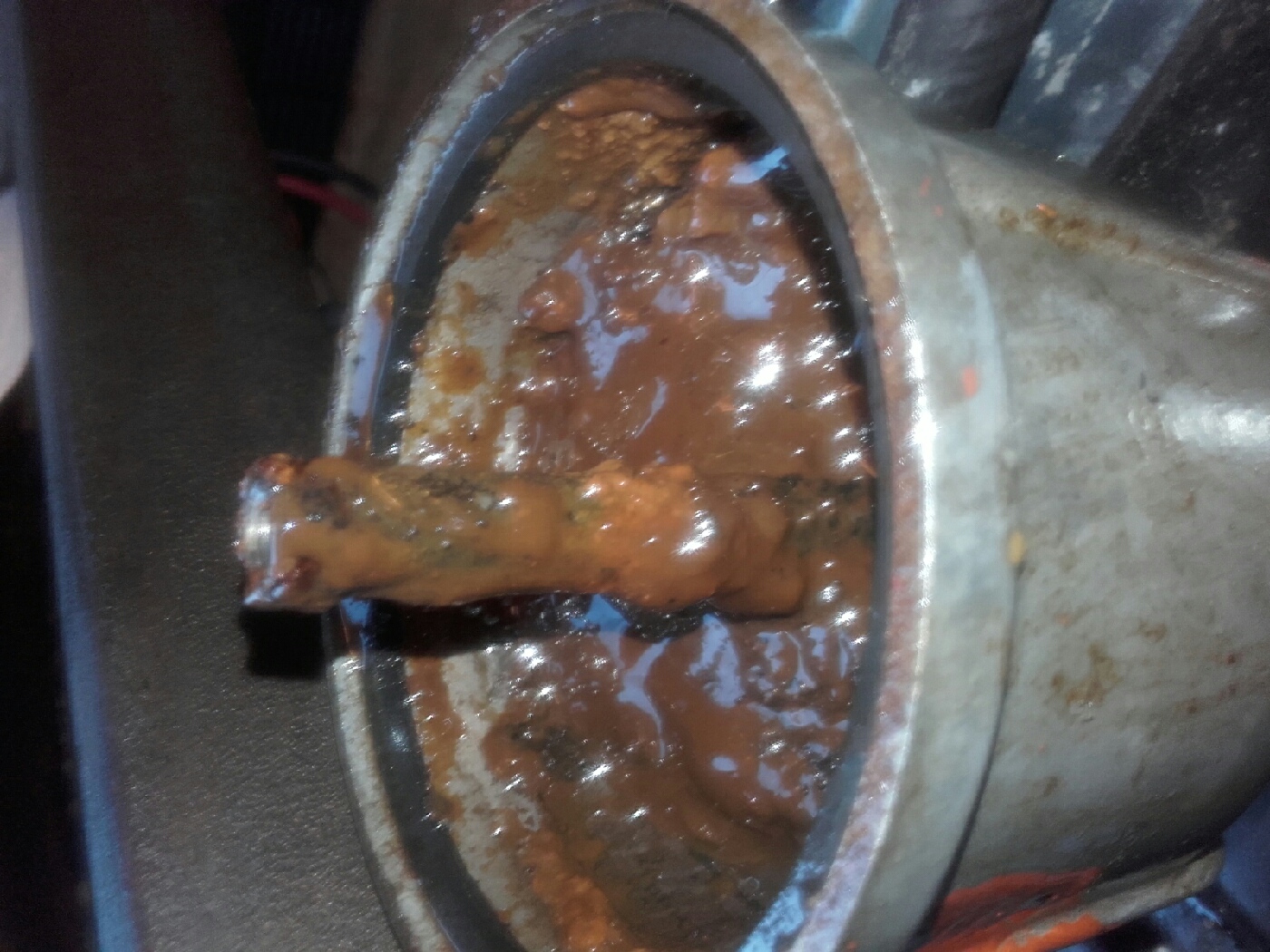
Contaminated fuel due to Diesel Bug and water contamination accounts for most of the fuel-related breakdowns, securing fuel issues second place. The bug is an enzyme that lives off water in diesel. In its mildest form it appears as black dust or soot, at its worst, its a black slime or jelly. Once in the system it clogs the engines fuel arteries and stops the engine working.

Historically, the whole system would need to be cleaned to tackle the bug, but River Canal Rescue uses a special fluid Marine 16 that prevents the bacteria from growing and kills anything that may be forming in the tank. One 500ml bottle treats 1000 litres (enough for multiple treatments) of fuel and is suitable for mild cases or as a preventative measure. More severe cases (or when the fuel system is blocked) require a Diesel Bug shock treatment.

Blocked filters and fuel contamination due to dirt and debris in the tank making its way through the fuel system also cause a large number of breakdowns a situation that can be easily rectified through regular checking and servicing. A number of marinas now offer fuel polishing services which will clean fuel without having to treat or dispose of the contaminated fuel.

In third place, breaking cables takes a bow. This is primarily due to their exposure to the elements as most of the cable terminus is set outside. Cables only have a certain life-span which means if they’re not used regularly, they’ll rust. To prevent this, you can grease the ends of the cable if leaving the boat for long periods of time, and always check the operation before you set off; if theirs any roughness or stiffness then it might be time to call into a marina to pick up a new one. When fitting, make sure that any bends in the cable are as minimal as possible as these will be the areas which suffer high stress and are likely to fail in the future.

Fourth place goes to a failure in the cooling systems which lead to the engine over-heating. The most common cause is due to an air-lock in the system which is simple to identify and resolve. To identify if this is the issue, feel the top and bottom of the swim tank, if everything is working fine there should be a difference in temperature, if not then both top and bottom will be hot or cold. To remedy this, locate and unscrew the bolt that sits on top of the swim tank and this will release the air locked in the system. However overheating can be caused by many issues from a coolant hose rupturing, (look for leaks) a water pump failing or a fan belt shredding (which drives the water pump) or the worst case, a head gasket failing.

There are a number of factors that contribute to alternator failure, from poor battery conditions resulting in the alternator working harder to charge the batteries, to battery management systems that over work the alternator to keep batteries continually charged up. Ultimately, one of the biggest issues is that alternators operate in a damp, hot environment, which is not healthy for any electrical product.

Like starters, theyre often left for long periods during the year and then used continuously for short periods. During this down period, rust can develop and affect operation. Theres no way to prevent this occurring other than to correctly winterise your vessel and regularly visit the boat and run the engine. This years call-out increase could be down to the amount of damp and rain, especially if water has ended up in the bilges. If your bilges are full of oil and water, this will be thrown over the alternators when the engine is running and as they are electrical components, the oil and water will bring about their early failure.

Preventative Maintenance

If you dont understand the workings of your engine or fail to service and maintain your boat, then its likely, at some stage, youll end up stranded. Lack of engine knowledge, gearbox /drive plate failures and faulty fan-belts, starters, propellers and couplings appear to be responsible for their fair-share of call-outs. In the majority of cases the emergency could have been avoided with a little know-how, by giving the boat a once-over or simply carrying spares.

River Canal Rescue runs monthly Engine Maintenance courses providing hands on experience in dealing with common issues and how to service your engine. Check their website for dates.

Know your engines common issues

Most owners believe the only way to turn off a boats engine when the switch fails (invariably causing a panic) is to turn off the fuel. However, most vessels have a manual stop button or lever located on the right hand side of the engine, half-way down. Using this instead of the fuel shut off will allow you to restart and continue on your journey without having to bleed your fuel system.

With Beta and Vetus engines a common issue is that the engine will not turn off or that the engine is completely dead. To resolve this, locate the wiring loom running across the top of the engine and identify a bulge. Peel back the rubber covering and you will find a block connector just pull the connection block apart and then put it back together. This should rectify the situation. Its easy when you know what to look for, so spend time scrutinising your engine before a failure occurs.

In contrast, if the engine is dead, it could be the isolation switches. If they’ve been left idle for a while, it could be due to a corrosive build-up, simply switch one way and then the other, or spray with WD40 before you set off.

Bilges as mentioned earlier, if your bilges are full of oil and water, this will end up being thrown over the engine and if it gets into the engine, the consequences could be disastrous (its also not a nice place for engineers to work). As well as starters and alternators, it also tends to affect drive plates if the oil/water mixture gets into the bell housing.

Gearbox/Drive Plates If you hit an underwater object, the drive plate is usually the first victim of this underwater collision. However, if you’ve damaged the drive plate, its unlikely you’ve damaged the gear box. General wear and tear appears to be another cause and because canal boats don’t have a clutch arrangement, gear boxes tend to receive a fair bit of abuse, so go easy and regularly service them.

Fan belts Always carry a spare, and before setting off develop a routine which includes checking the condition of these. Simply twist the belt and if there are cracks or the edges are starting to look ragged its time for a new belt. If you hear squealing from an old belt its usually an indication a replacement is needed. If its from a new belt, an adjustment is required. This is simple to do and worthwhile knowing how to.

Couplings – if the bolts connecting the propeller shaft to the engine are loose, any movement will either sheer them off, resulting in loss of propulsion, or make the coupling bolt holes oblong, resulting in delayed drive. Eventually the coupling will need to be replaced, and you may even have to change your prop shaft if the coupling has damaged it. A simple check before each journey will stop this happening.

Before a journey – its vital you develop regular maintenance routines and complete these before your journey, particularly if the boats been sitting idle for a long period.

Check the oil (especially important if you’re a new owner as you need to identify oil usage), and keep the engine clean (it’ll be easier to identify any new problems developing).
Look for leaks, if fuels seeping out, air will be getting in which will cause problems like erratic running and high engine vibration.
Check the bilge pumps are working and that you have enough to do the job effectively (RCR recommend installing one in the bilges for the living area it can prove essential if you get a hull leak or a pipe for your domestic system fails)). Also is there any water in the bilge? Find out why.
Check the battery and top-up with de-ionised water.
Check if the fan belt is loose, worn or even still there?
Look for any loose bolts/pipes (particularly the engine mounts and propeller shaft).
Scrutinise cables and control equipment for signs of wearing/fraying and tighten linkages etc replace or grease where necessary.
Owners who live aboard their craft appear to have far fewer call-outs because of the routines they already have in place.

Tool Box Essentials

Dont confine your tool box essentials to the garage a canal boat is equally as likely to require the same level of care and attention you give your home and vehicle.

The following are useful to have on board;

  • A multi-meter (battery tester)
  • PTFE tape (for dealing with unexpected domestic leaks)
  • Adjustable spanners
  • A flat head and multi-faceted Phillips screwdriver
  • Pliers
  • A hammer
  • Spare lengths of electrical wire/ insulation tape
  • A socket set

And dont forget the spares, such as; morse cables for steering, throttle and gear selection, fan belt, impeller, spark plugs, fuel filter, bulbs, bolts and fuses, plus a supply of oil and and stop leak or putty for those unexpected hull breaches.

Before you make that emergency call

Below are some common scenarios which may help you solving the problem before making that call;

If you are losing propulsion and the propeller is slow-moving, put the engine in reverse. The prop may be covered in weed or leaves and this can help release it.

If the engine cuts out when in gear, check the propeller for obstruction.

If the engine cuts out when revved, check the air filter – it may be blocked with dust (can be removed and run without it in an emergency). Alternatively check for blocked fuel filters (Vetus has a small fuel pump filter that is usually overlooked).

Is the engine overheating? It could be an air lock in the cooling system. Resolve it by unscrewing the bolt sitting on top of the water tank – this will release the air.

If the boat wont go into gear, check the cable is moving the selector arm on the gearbox, if it is then the cable is fine. Check the oil in the gearbox.

Engine wont turn off? Know where the manual stop button or lever is situated, usually on the right hand side of the engine

A word of warning – Bio diesel

Whilst River Canal Rescue is yet to collect conclusive proof, the firm has gone from replacing two injector pumps a year to 48 in 2014. It is feared bio-diesel which is known to corrode rubber seals and cause internal rusting is resulting in the increase in injector pumps failing. RCR is monitoring the situation and will report back on trends, however in the meantime, the use of a fuel treatment additive like Marine 16, to help lubricate the system is recommended.