
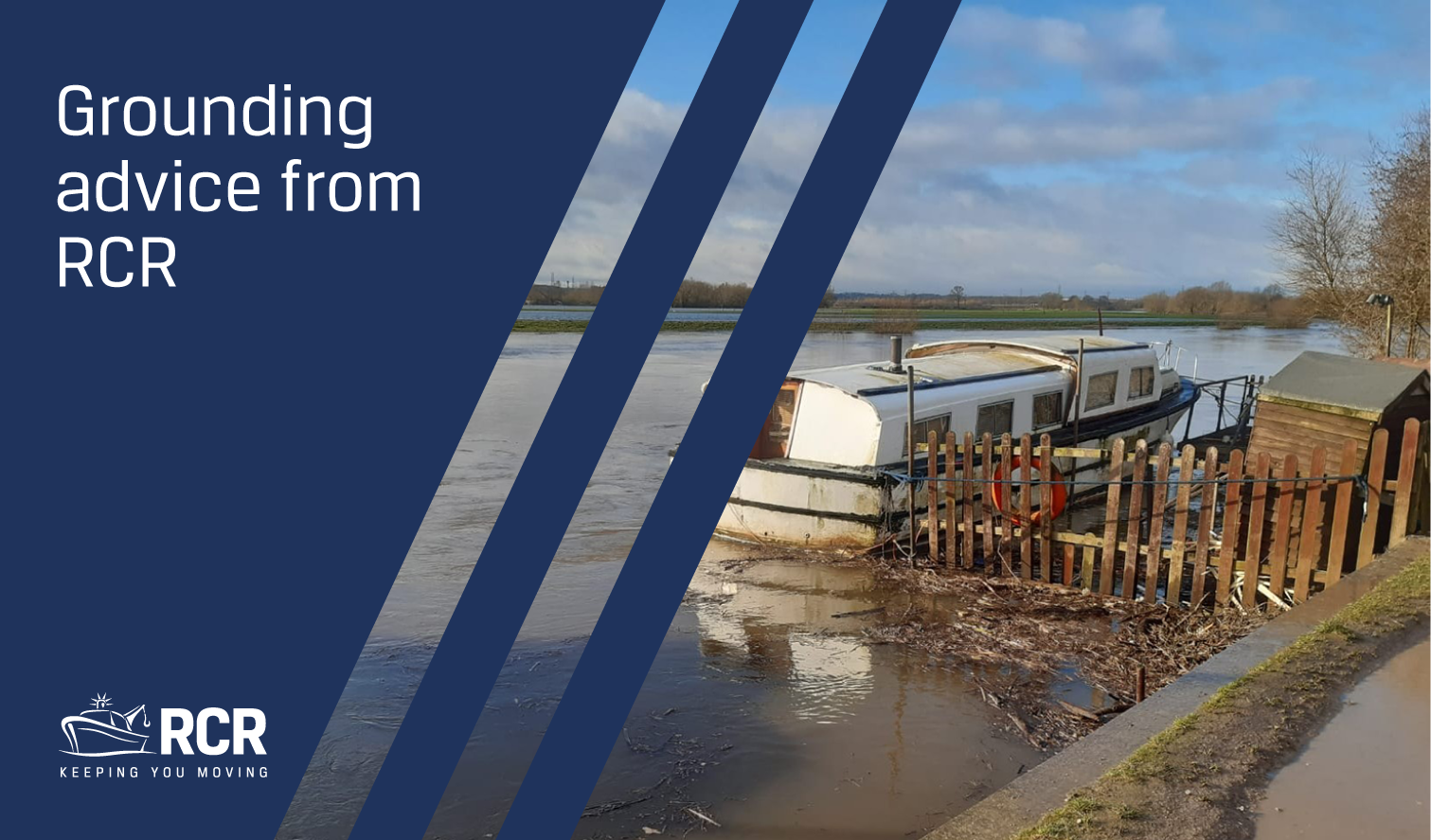
River Canal Rescue (RCR) is warning boaters about the risks of grounding after receiving 40+ calls in a six-week period, prompting a higher than usual number of call-outs.
From 1 June to 11 July, rescue co-ordinators have been giving on the phone assistance to one/two people a day, and while many callers are then able to move their boats, around 40% require intervention from the Canal & River Trust (CRT) or support from a rescue team.
Low water levels, sand banks and underwater obstacles are causing problems in a number of areas including: the Hatton locks, Caldon Canal, Oxford Canal, Grand Union, Trent & Mersey and River Nene. By 10 July, the CRT had posted 15 alerts on its online stoppage map, detailing navigation and lock closures, restrictions and areas where water levels were at their lowest.
If a boat runs aground, RCR will liaise with the CRT, to check low water levels are causing the stoppage, and the CRT will endeavour to move the boat (if it can’t be moved by the caller). If the CRT is unavailable or other issues are identified, RCR will despatch a team. This type of event is usually covered by a fully comprehensive insurance policy.
Low water levels are also putting drive systems under pressure. Without the depth to ensure smooth travel through water, the load transfers to the drive system, resulting in gearboxes overheating, and a higher risk of hitting/catching something underwater, causing damage to drive plates and couplings.
RCR reports gearbox, coupling and drive plate issues have risen by 50% in some cases, when compared to the same period last year. From 1 June – 11 July, 11 gearboxes, 16 drive plates and 7 couplings were replaced; in 2024, it was 5 gearboxes, 11 drive plates and 6 couplings.
RCR managing director, Stephanie Horton, advises keep the revs down: “If you’re on a canal and you find the boat is not moving as fast as usual, and water levels look low, DON’T simply increase your speed, be patient and wait until the water levels increase or you can get though a lock to a better location. Speed on low water puts pressure on drive systems.”
Weed is another problem across the network, impacting propellers and blocking intakes of raw water-fed boats and outboards.